Friday, October 29, 2010

CAPS ROUND 2


Rules change! You may only participate by Commenting, Buzzing, OR Facebook - no checking others' answers outside your method please. Points will be awarded separately. Lets see how that works. Still, here are the standings from Round 1:

Don Corcoran: 5 points
Davey Cruz: 4 points
Michelle Younce: 3 points (I thought Jeff would've gotten the Buster Keaton pic first, but M got to it before he did!)
Anne Austin: 3 points
Rob Greene: 2 points
Frank Manna: 2 points
Akaemi Barnett: 1 point
Karen Cordano: 0 points under the old rules, but would've been 3 under the new. Thus: 1 point
Gabe Soll: 1 point (again, zero under yesterdays rules, but he deserves one)
Wam: No points for just saying you think you know sommat without proving it!

Thursday, October 28, 2010

MORE CAPS


same rules: no internet searching. You may, however, pop a movie you own into your player and play it if you think you know but aren't quite sure. Lets say one point each for actor or movie, three points awarded for getting both right for each pic. First person to put it in comments either here or on FB gets the point(s). Davey Cruz is the man to beat from round 1. But since that was a warm-up round, no score awarded. This time it's for fake worthless internet points!

Wednesday, October 27, 2010

ALL CAPS

Here are a few screencaps from some of the hundreds of films I'm backing up to the HD so we can watch them anytime on the PS3. I'm thinking you can name them all, but maybe not.


Wednesday, October 20, 2010

Wednesday, October 13, 2010

More Tea, Vicar?

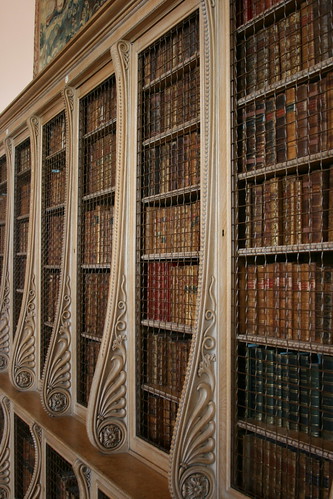
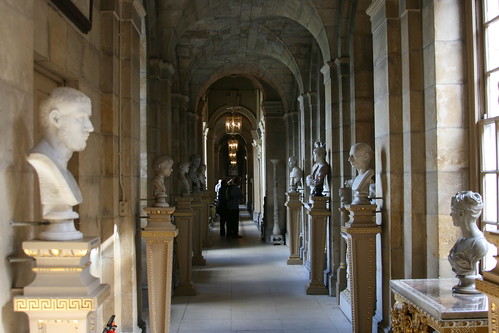
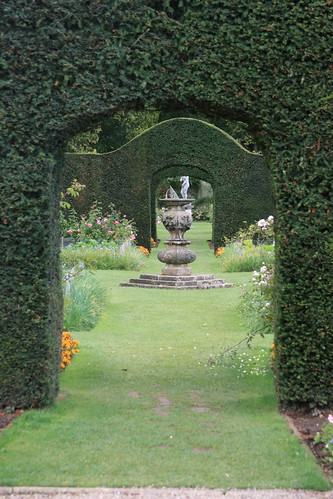
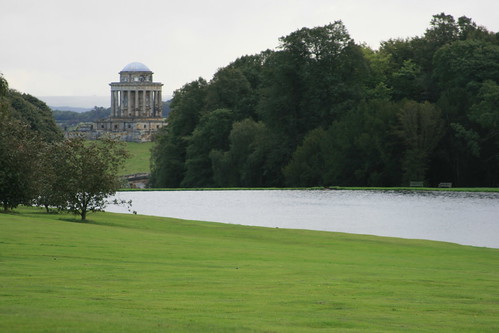
A couple of weeks ago M and I had 'Date Day', where we send the kids to day care and school but then skip work and spend the day together. We went to Castle Howard, which was a lot of fun to wander through at 'adult-pace' instead of 'bored-kiddo-pace'. It was suitably impressive:

Castle Howard

Library, Castle Howard

Statuary Hall, Castle Howard

Garden, Castle Howard

Temple of the Four Winds, Castle Howard

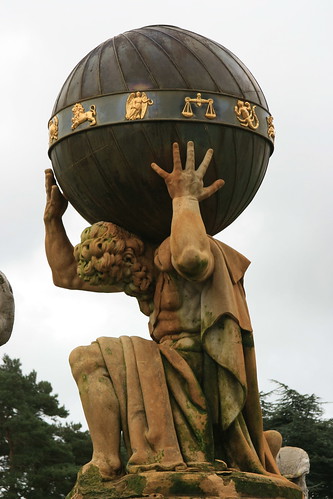
Atlas, Castle Howard

More pics on my flickr.

Anyway, we stopped in the bookshop (as I am wont to do on such visits), and I picked up Know Your Sheep for the kids (its a picture-book of different breeds found in the UK) and More Tea, Vicar?: An Embarrassment of Domestic Catchphrases for myself. It is hilarious.

It is full of phrases like "All fur coat and no knickers" along with their origins, usage, and amusing anecdotes from contributors.

Because I know we're long overdue for some bathroom humour on this blog, here are some of the "Loophemisms" (get it?) that the book lists:

  • Go and check the blackout
  • go and check the plumbing
  • go and check the price of wheat in Chicago
  • go and drain one's radiator
  • go and empty the ashtrays
  • go and empty the teapot to make room for the next cup of tea
  • go and lower the level
  • go and partake of a minor comfort
  • go and pick a daisy
  • go and pump ship
  • go and wring out one's socks
  • go and see a friend off to the coast
  • go and see if ones hat is on straight
  • go and see the man I joined up in the army with
  • go and see the Turk - Mustapha Pee
  • go and shake hands with the wife's best friend
  • go and shake the dew from one's orchid
  • go and sit on the throne and rain over my subjects
  • go and telephone Hitler
  • go for a wee walk
  • go to do a job that no one else can do for me
  • go to the smallest room
  • go where kings go alone
Got any other favorite loophemisms you care to share with the internet?

Monday, October 11, 2010

On Ehfarism

Does everything, in fact, happen for a reason?

People may say "everything happens for a reason", but I tend not to. But its not like I've never said it. The subject came up recently when corresponding with a friend who had experienced some recent personal tragedy. As often happens in such situations, one of the things people said was "Everything happens for a reason" (hereafter ehfar). This was interpreted by my (agnostic) friend as "God does things in people's lives as part of his (somehow ultimately fair) plan". Here are some adapted thoughts from our correspondance about it.

First off, "everything happens for a reason" is not an equivalent statement to "life is fair.". Not even the deeply devout believe life is fair. That's not what anyone means when they say ehfar, at least not in my experience. Here are some things that ehfar might mean instead, depending on the speaker and the circumstances:

1) in the strict sense of physics and chemical reactions, every thing that occurs does so because of some other thing having occurred previously. There are those who take this to it's deterministic limit and believe that the paths of all atoms, from distant black holes to the photons coming through your screen to your thoughts and mine, were written in the initial trajectories of the Big Bang. I believe in free will, because I believe in a thing called a soul, so I don't go that far. But even though I believe I and you and lots of other forms of life make choices, those things still happen for 'reasons'. As you might expect from me, I take a phrase like ehfar and immediately think;
a) Well, what is everything?
b) What is a 'reason'?
c) I'm giving you a free pass on 'happens', but I wouldn't have to.
Here's as simple as I can make it: At some level, every occurrence (thing), however small or great, occurs (happens) because it was enabled, caused, or otherwise influenced by the occurrence of other things (a reason). Vague, and perhaps over-reliant on sophistry, but probably true.

2) another thing that is sometimes meant by ehfar is akin to my friend's above interpretation but subtly different. Sometimes people who believe in a personal God actually do mean to say that everything that occurs does so because He either causes it to do so or allows it to do so. It is difficult to reconcile the idea of a loving God with a being who would stand idly by while women are raped, children are killed, and people generally commit grevious injustices to each other. Each religion attempts to reconcile this apparent paradox in it's own way, with varying degrees of logic or success. Let's just leave it at that. The details of those reconciliations vary, but even the strongest "it's all part of God's Plan for you" advocate wouldn't go so far as to say that all plans are equal (at least during mortality - some reconciliations depend on the balancing effects of a judged afterlife experience).

3) another, less spiritual meaning that is sometimes expressed by ehfar is the idea (or perhaps more accurately hope) that one day, after the present experience is gone, one will be able to look back on what has transpired since and at least accept that the destination achieved by traveling that road is an ok place to be. This hope does not always hold true; many lives take a tragic turn from which even a partial recovery is impossible. However, someone who says ehfar in this way isn't actually trying to state a fact: they're expressing a hope. That hope is that the listener will have future experiences and that these future experiences will be acceptable in place of whatever might've been that now cannot be. This is, I think, the usual meaning of the phrase.

Anyway, as you well know, ehfar does NOT mean that everything that happens happens for the greatest possible good or happiness of the most people possible. We would live in a very different world were that so. I don't think that's what anyone who says ehfar means.

Furthermore I don't even typically say ehfar so I don't know why I've just spent so long defending those who do. But it was nice to spend some time thinking about it, and maybe it helps you deal with the ehfarists in the future.

Wednesday, June 23, 2010

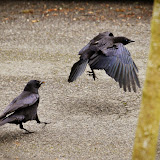
Ravens

Sunday, April 11, 2010

Pine Nut & Eggplant Pilaf

Tried this for dinner tonight and even the kiddo's loved it! So, it might be worth trying in your household:

1 cup uncooked Arborio rice
3/4 lb eggplant
salt
olive oil
1 medium onion, chopped
1/2 cup pine nuts
1 can diced tomatoes, drained
1 tablespoon sugar
1/2 teaspoon allspice
1/2 teaspoon cinnamon
black pepper
1 1/2 cups chicken or beef stock
fresh dill or fennel (optional)


Top and tail the eggplants, then quarter them and cut into 1/2 inch slices. Put the slices in a colander and salt generously. Leave over a bowl for 30 minutes. Rinse with water and squeeze dry a handful at a time.

In a large pan (with lid) or dutch oven, cook onions and pine nuts in 2 tablespoons olive oil until they turn golden brown. Meanwhile, in a skillet or wok on a medium high flame, heat up a few more tablespoons of olive oil. In batches, stir-fry the eggplant until browned. Add the diced tomatoes to the onions and pine nuts and sautee for 2-3 minutes.

Turn the heat to low. Add the spices and sugar, stir a bit, then add the rice. Stir often for about 5 minutes, then add the stock and eggplant. Cover and allow to simmer over low heat for about 15 minutes, till no liquid is visible.

Elevate the pan on a wok ring if you have one to bring to even lower heat. Drape a folded kitchen towel over the top of the pan and replace the lid. Allow it to steam for an additional 15 minutes. Stir and serve.

Adapted from Classical Turkish Cooking, by Ayla Algar

Monday, March 22, 2010

Kazoo Metal

The Final Countdown (Europe Cover) by Toy Dolls  
Download now or listen on posterous
The Final Countdown (Europe cover).mp3 (5827 KB)

If this doesn't cause you to thrash, you have no metal in you.

Posted via email from daveyounce's posterous

Wednesday, March 03, 2010

2008-2010 Internet Meme Bible

Sadly, one could probably do the whole Bible this way...

Posted via email from daveyounce's posterous

Monday, March 01, 2010

Like, Python

Like, Python(alpha)

Like making computers do your bidding?
Enjoy Python features like lambdas? Indent-grouping? List comprehensions?
Tired of Old Man Python telling you what you can and can't say to your computer?

It's about time programming languages understood what the kids are typing these days. So let's start with a baby step in that direction: Like, Python.

Like, Python was created by Jonathan Howard in February 2010 while drinking and reviewing code for an upcoming project with a coworker. At a certain point, higher-level explanations devolved into just flat-out reading Python code like they were actually speaking the language normally - complete with like's, um's, whatever's, etc - making it completely impractical awesome for work. It was then that Jonathan realized he should perhaps stop for the night. And START creating Like, Python.

EXAMPLE

Like, Python uses Python's own tokenizer to essentially add keywords to Python's lexical understanding. Python is a subset of Like, Python, so any script you've already written in Python is valid Like, Python and will run in the interpreter. But you can also write like you'd speak. For example, the following is a fully-functional "hello world" script, included in the download as hello_world.lp:

  #!usr/bin/python  # My first Like, Python script!    yo just print like "hello world" bro  

Here's a version that asks you for your name, then says hi. (Note that 'yo' is a Like, Python keyword but the interpreter actually understands real Python syntax, so the 'yo' in the input string works just fine.

  #!usr/bin/python  uh from sys import exit    # Grab the user's name.   ok so like name = raw_input("yo! what's your name?" ) right    # Make sure they entered something, then say hi.  if name.strip() is actually like "":  toootally just exit()  else:  um yeah  print like "Hi %s, nice to meet you." % name  

A full list of Like, Python keywords is below (swearing optional):

  • Valleygirl: omg, so, like, totally, right, toootally
  • Frat guy: friggin, fuckin, dude, man, bro, broheim, broseph
  • Internets: lol, rofl, teh, ohai, plz
  • Snoop: yo, homey, homeboy, sup, dog, shit, girl, ma, biatch, ho, shiiit
  • Local: wicked, hella, anyways
  • Misc: just, hey, yeah, ok, um, uh, ah, actually, something

INSTALLATION

To install on Mac OSX and Linux, just unzip, make sure you have admin privileges on your machine and, type the following from inside your likepython directory:

  ~/downloads/likepython> sudo cp ./likepython /usr/bin/  ~/downloads/likepython> sudo chmod 555 /usr/bin/likepython  

If everything went well, you can now code in Like, Python! Test it on hello_world.lp (included) like so:

  ~/downloads/likepython> likepython hello_world.lp  

VERSION

This is version 0.1, the stable alpha release. If you like it, let me know! jonathan[at]staringispolite.com

Or, you know, if not, you can like, tell me what you think could be improved. Especially new words Like, Python should include. Bro - it could like totally be in the next release.

LICENSE

The MIT License
Copyright (c) 2010 Jonathan Howard

Permission is hereby granted, free of charge, to any person obtaining a copy of this software and associated documentation files (the "Software"), to deal in the Software without restriction, including without limitation the rights to use, copy, modify, merge, publish, distribute, sublicense, and/or sell copies of the Software, and to permit persons to whom the Software is furnished to do so, subject to the following conditions:

The above copyright notice and this permission notice shall be included in all copies or substantial portions of the Software.

THE SOFTWARE IS PROVIDED "AS IS", WITHOUT WARRANTY OF ANY KIND, EXPRESS OR IMPLIED, INCLUDING BUT NOT LIMITED TO THE WARRANTIES OF MERCHANTABILITY, FITNESS FOR A PARTICULAR PURPOSE AND NONINFRINGEMENT. IN NO EVENT SHALL THE AUTHORS OR COPYRIGHT HOLDERS BE LIABLE FOR ANY CLAIM, DAMAGES OR OTHER LIABILITY, WHETHER IN AN ACTION OF CONTRACT, TORT OR OTHERWISE, ARISING FROM, OUT OF OR IN CONNECTION WITH THE SOFTWARE OR THE USE OR OTHER DEALINGS IN THE SOFTWARE.

Download Like, Python now!

(Yep! It's actually real)
linux/mac (.tgz) | windows (.zip)
Got reddited & scaled w/ no problem. Check these guys out:

The temptation to write all new Python code in Like, Python is pretty strong.

Posted via web from daveyounce's posterous

Saturday, February 27, 2010

Somebody Hook Google Earth up to that thing!

Relief: Physical 3D Interactive Maps: A Step Towards the X-Men GI

Relief is an actuated tabletop display, which is able to render and animate three-dimensional shapes with a malleable surface. It allows users to experience and form digital models like geographical terrain in an intuitive manner.


The tabletop surface is actuated by an array of 120 motorized pins, which are controlled with a platform built upon open-source hardware and software tools. Each pin can be addressed individually and senses user input like pulling and pushing as the clip below illustrates:


TEI 2010 / Relief: a responsive 3D surface from benny on Vimeo.

The system is termed a "scalable actuated shape display", created by Daniel Leithinger, Adam Kumpf, and Hiroshi Ishii of MIT's Tangible Media Group. In the chat about this around the office it was suggested was that it reminds us of the maps used in the X-Men films, now that would be a neat way to display data.

Picked up via Make.

Posted via web from daveyounce's posterous

The Spectatorium, 1893

I'm putting "Chicago, 1893" on the list of preferred time-travel destinations.

via InfraNet Lab by mwhite on 2/10/10

mackaye-spectatorium2
[Steele MacKaye's Spectatorium was intended to re-create the landing of Christopher Columbus, complete with mini-ocean, waves, and an island.]

With seating for 10,000, an eight foot deep concrete tank under the entire stage complete with wave machine and wind machines, railroad ties to aid in the shifting of three dimensional scenery behind a “light curtain,” the Spectatorium was envisioned for the 1893 Chicago Exposition. Conceived by the engineer and dramatist Steele MacKaye (father of Benton MacKaye), the Spectatorium was intended as a “mechanical duplication of nature.” In fact the spectacle was intended to be so immersive that the play was written intentionally to contain no speaking parts.

[The Spectatorium, a twenty-five stage theatre designed to mount Steele Mackaye's play about Christopher Columbus for the Chicago Exposition of 1893, unbuilt.]
[A section through The Spectatorium, a twenty-five stage theatre designed to mount Steele Mackaye's play about Christopher Columbus for the Chicago Exposition of 1893, unbuilt.]

Recommended reading: Pictorial Illusionism: The Theatre of Steele MacKaye by J.A. Sokalski.

Posted via email from daveyounce's posterous

The thrill of curling

We've actually seen quite a bit of curling coverage on BBC Sport this year - British men and women both made it pretty far into the tournaments, and we just watched the women's gold medal game between Canada & Sweden (see below). It is sort of dreadfully slow at times, but it has grown on me and I can see the strategy and skill involved. My friend Andy recently described curling as "the nail-biting action of bowling with the glamour of sweeping your entryway." In a way he's still right, but I think curling is going to take its place among Winter Olympics sports I am willing to watch (and not just because of the moment captured below).

Posted via email from daveyounce's posterous