Showing posts with label words. Show all posts

Thursday, November 29, 2007

Word of the Day: Chiminage

I saw this used in a forum thread and had to look it up. It's totally getting added to 'words to look for reasons to use'.

Chiminage

\Chim"i*nage\, n. [OF. cheminage, fr. chemin way, road.] (Old Law) A toll for passage through a forest. [Obs.] --Cowell.

Monday, October 08, 2007

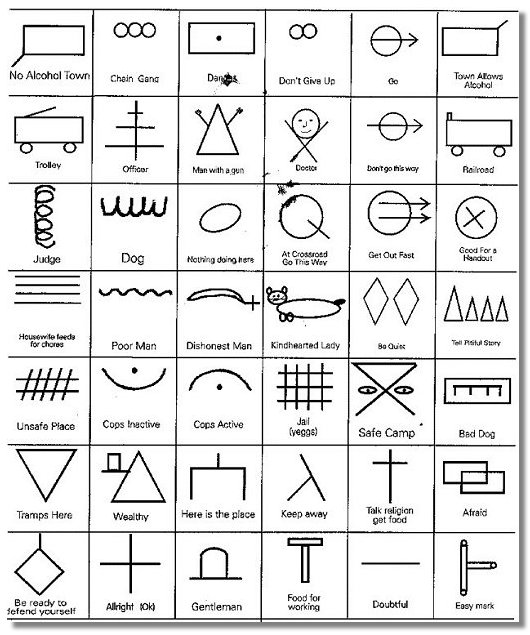
Hobos, Angels, and Klingons


I recently came across a story about the Dance Notation Bureau that talked about the near-death and resurgence of "Labanotation", a written system for annotating dance allegedly accurate down to the eyeball-blink.

Then, the other day, Davey, in one of his various efforts to make sure I go insane or at least don't get as much work done as I might otherwise, sent a link along about the Voynich Manuscript which has yet to be translated, if in fact any translation exists.

It has me thinking about all the different ways we humans use writing, and all of its various forms. How very many of them that were once used are now exceedingly rare or entirely forgotten. On the one hand, it seems a great pity to have lost so much knowledge that was part of humanity's development; on the other, as languages die and are folded into each other, more people are able to communicate, and that can't be all bad. Taken to its natural extreme, we would expect that, given enough time and globalization, everyone will speak the same tongue.

Then there is the idea that all of language springs from some (lost) original, single language, termed Adamic[link] by some, Enochian[link]
by others, and probably known by myriad other names. Those of you who have read Genesis will remember the story of the Tower of Babel, and of the confounding of tongues [link] as punishment for attempting to reach heaven by mere architecture. It's not the only account of a perfect, original language being lost. Some time ago now, I started but never finished The Search for the Perfect Language, by Umberto Eco (Amazon is kind enough to tell me I bought it in May, 2004). From the back copy: "The idea that there once existed a language which perfectly and unambiguously expressed the essence of all possible things and concepts has occupied the minds of philosophers, theologians, mystics, and others for at least two millennia. This is an investigation into the history of that idea and of its profound influence on European thought, culture, and history." I wish I'd read it all, but (and I say this as a fan) Eco's not all that easy to read. Maybe I'll put it back in the queue.

But, for now, we're losing languages and methods of notation. And, reason would argue, it's bound to happen. That linguistics and systems of writing or notation should follow 'the survival of the fittest' comes as no surprise. Probably we would be correct if we said that any such system or language passed out of use because it was no longer needed by those who knew it, or because they themselves failed to pass it on.

Still, part of me pines to know all such things. I doubt I could even come to know the full list of disappeared or little-used systems of writing, much less actually learn any of them.

Here are a few, in broad strokes:


And so forth. Totally useless to my modern life - all of them. And yet... I mean, if I could mark my street with hobo signs saying this wasn't a good place to stop, that'd keep the hobos away, right? Or, if I could read alchemical symbols, I could, uh, make something? If I spoke Navajo, I could be a WWII Codetalker? See, there's no reason to want to know any of it. But that doesn't stop me.

So here's a point to ponder: let's say you woke up tomorrow as a perfect example of Xenoglossia; you can now speak or read/write (but not both speak and write) any language or notational system, living or dead, that is currently known by no more than 100,000 people. Which do you choose, and why?

Thursday, September 20, 2007

Friday, September 07, 2007

Buffalo buffalo Buffalo buffalo buffalo buffalo Buffalo buffalo

Kerry was feeling mean, so he sent me to the wikipedia page explaining the gramatically correct sentence "Buffalo buffalo Buffalo buffalo buffalo buffalo Buffalo buffalo". I had to read it until I understood it, and sounded like an insane man while explaining it to another coworker, as we both said Buffalo far more times than a reasonable person should in a year. "Indeed, for any n ≥ 1, the sentence 'buffalo' is grammatically correct," so we could still be saying it and our sentence would still be describing the brusque nature of upstate New York bison to each other.

Wherein you discover that I'm a chip off the old block...

My dad has posted two excellent decision trees: Moisture on the Earth and Moisture in the Air. Mystery remains where I get my logical nature...

Monday, August 27, 2007

What is this Fruit-Flavored Beverage?


* For statistics on whether you actually call this "soda" or not, plot your place of origin on this map:

Friday, May 25, 2007

Monday, May 21, 2007

Friday, May 18, 2007

by Request: Violent Civil Disobedience Decision Tree


Tricky.

Edit Added geographic qualifiers on juntas (see comments).

Tuesday, May 15, 2007

Horse-Drawn Wheeled Vehicle Decision Tree


Just so we're clear, carts & wagons are for moving mainly goods (yes, even Conestoga wagons and gypsy wagons). Carts have 2 wheels, wagons have 4.

Updated: Now with Surreys! (Thanks, Maren)

Vehicle Venn

Part 1 of a series:

Wednesday, May 09, 2007

Tree Tree reloaded


Now correct for Texans! and incorporating Stands!

Tuesday, May 08, 2007

What do you call one or more trees?


Original draft:


Next time: Tick, Chigger, or Mite?

Monday, April 30, 2007

PoK: Demonymns

For each of the following places, what would you call a group of people from that place?

1) Omaha
2) Utah
3) UAE
4) Azerbijan
5) Burkina Faso
6) Gibraltar
7) Glasgow
8) Phoenix

Answers to 'Poorly Drawn Map of Australia'
A) Northern Territory
B) Alice Springs
C) Ayers Rock or Uluru
D) Western Australia
E) Perth!
F) South Australia
G) Adelaide
H) Victoria
I) Tasmania
J) Melbourne
K) Canberra
L) Sydney
M) New South Wales
N) Queensland
O) Great Barrier Reef
P) Cairn

Thursday, April 26, 2007

Guest PoK: Motorcycle Culture

Today's is by Dan Lackas.

1) What is the origin of the word 'Hog'? What does it refer to now?

2) What does each of the following terms refer to:
*Squid
*RUB
*Cager
*Bluehair
*Road Gator
*Backwarmer

3)In the original Honda ad: "You could find ____ _________ _________ on a Honda"

As for answers for yesterday's PoK, I got sucked into the amazing The Vinkhuijzen collection of military uniforms on the NY Public Library's site last night. I found amazing examples of each, but they're downloaded at home, so I'll compose the answer post sometime this weekend with them. But Davey was pretty close, except on Sapper, which is my favorite.

Thursday, April 12, 2007

PoK: Plural Nouns, Part I

Plural Nouns Part I


Parts 2-20 may or may not ever happen. For each of the following animals, list the proper name for a group of animals. Example: cow=>herd. Some have more than one right answer. Got it? Bonus: name the name for a young animal of each type.

1)Rhinoceros

2)Goose

3)Ant

4)Lion

5)Whale

6)Crow

7)Rook (the bird, not the chess piece)

8)Raven

9)Badger

10)Hyena

Answers from PoK:Pomegranates

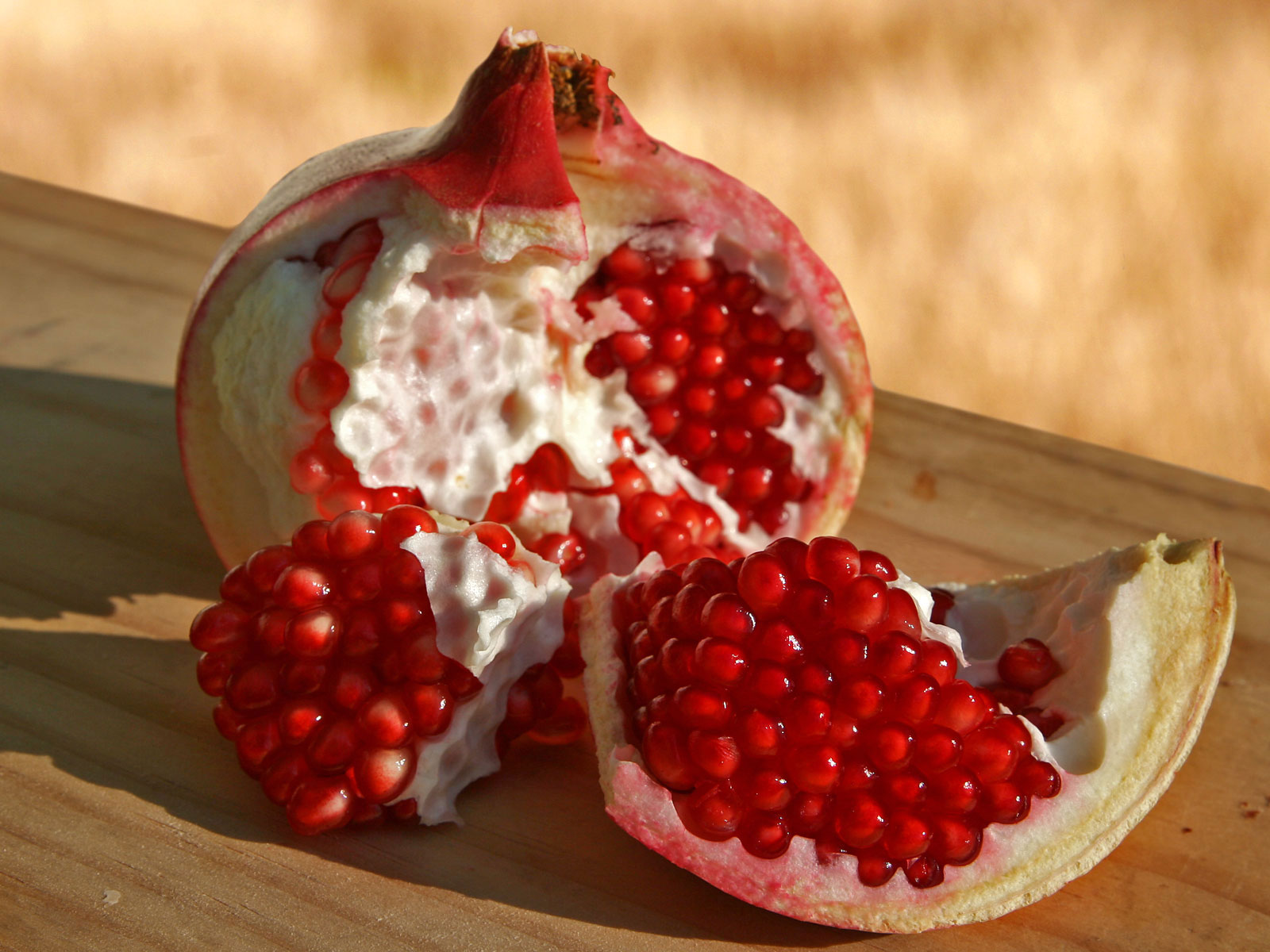
1) What does the word 'pomegranate' mean and in what language?
Kari did best here, with 'Apple of Grains' - pomme is Latin/French for apple, and granate is grains or seeds. Seedy apple. I actually almost asked for the bonus question to name states or people with the pomegranate as their symbol, but I thought nobody would get it - so good on you, Kari! the rest of you were pretty close, too.

2) What gem derives its name from the similarity in color to the fruit?
Nice job, it was garnet.

3) What modern weapon derives its name from the similarity in shape to the fruit? This one was maybe a little obvious, but it's pretty cool, no? First attested usage comes from 1523

4) Under what conditions will pomegranate juice turn blue?
Those of you who guessed acid were on the right track, but headed the wrong direction. Alkaline conditions will turn it blue. Which provides for some amusing imaginary MacGuyver moments where you need to know whether you can drink from a lake but all you have to test it with is a pomegranate.

5) In Greek Mythology, who is famous for eating a pomegranate and what were the consequences of that action?
Yup, Persephone, and it's why we have winter

Bonus: Name two health benefits of pomegranate juice.
Obviously, some of these are more provable than others, so everybody gets credit, even (perhaps especially) Michelle.

For Kari's bonus question, I agree with Maren - do it in a bowl of water & strain them out. Are we right?

Wednesday, April 11, 2007

Plane of Knowledge: Pomegranates


1) What does the word 'pomegranate' mean and in what language?

2) What gem derives its name from the similarity in color to the fruit?

3) What modern weapon derives its name from the similarity in shape to the fruit?

4) Under what conditions will pomegranate juice turn blue?

5) In Greek Mythology, who is famous for eating a pomegranate and what were the consequences of that action?

Bonus: Name two health benefits of pomegranate juice.


Answers to All Things Piratical:
1) What is the difference between a pirate and a privateer? As Maren implied, the difference is state sponsorship, usually in the form of Letters of Marque and Reprisal.

2) What language does the word buccaneer come from and what does it mean?
It comes from French boucan, a name for racks used to dry & smoke meat in the Carribean - thus, it basically means Barbecuer. Apparently some barbecuers took to piracy.

3) What was Blackbeard's given name? Edward Teach.

4) What group of pirates was the target of the US' first overseas military action and where were they based?

The Barbary Pirates were disrupting American shipping in the Mediterranean, which resulted in the First Barbary War, in which the port of Tripoli played a major role. This is the origin of the phrase "the shores of Tripoli" in the Marine Hymn.

5) The Island of Tortuga from the Pirates of the Caribbean movies is a real place. What modern country is it part of? The island is across a channel from Port-au-Prince, Haiti, and is part of that country today.

6) What became of the famous pirate town Port Royal? Port Royal was a popular pirate town until, in 1692, an earthquake resulted in 2/3 of the city being sunk into the sea.

Bonus: In Gilbert & Sullivan's Pirates of Penzance, what is Frederick the 'slave of'? What is the paradox that thus enslaves him?

As Tona correctly stated, the full title of the play is "The Pirates of Penzance, or The Slave of Duty". Maren correctly articulated the paradox, that Frederick was apprenticed to serve the pirates until his 21st Birthday, not merely his 21st year. As somebody born on Leap Day, his 21st year meant he had as yet had only 5 birthdays.

Edit: While I was posting this, Davey posted in the comments of All Things Piratical and did very well, getting at least partial credit on all but #6. YAAR, Matey!

Tuesday, April 10, 2007

The Plane of Knowledge: All things Piratical


PIRATES!
1) What is the difference between a pirate and a privateer?
2) What language does the word buccaneer come from and what does it mean?
3) What was Blackbeard's given name?
4) What group of pirates was the target of the US' first overseas military action and where were they based?
5) The Island of Tortuga from the Pirates of the Caribbean movies is a real place. What modern country is it part of?
6) What became of the famous pirate town Port Royal?

Bonus: In Gilbert & Sullivan's Pirates of Penzance, what is Frederick the 'slave of'? What is the paradox that thus enslaves him?


Answers to the Plane of Knowledge you've been dreading:
- Gymnophobia is actually fear of nudity. Gives you a whole new perspective on gymnastics and gymnasiums, doesn't it?

- Acrophobia is, as everyone surmised, fear of heights.

- Triskaidekaphobia is not, sadly, fear of dancing triscuits, but fear of the number 13.

- Apiphobia: Maren, I was impressed by fear of application program interfaces, that's certainly what the programmers around here first thought. But Quinn had it right, fear of bees (apiculture, apiary)

- Ophidiophobia is, as Brian correctly surmised, fear of snakes.

- Hexakosioihexekontahexaphobia: Quinn had it right; fear of the number 666.

- Epistemophobia, Quinn again with Fear of Knowledge.

Bonus: Nyctohylohippophobia. Maren was actually closest, with "Fear of meeting up with wooden hippos at night??" - it would actually be fear of meeting horses in a forest at night. But you weren't around for the earlier hippo=horse PoK, so we'll forgive you.

Monday, April 09, 2007

Plane of Knowledge: The PoK You've Been Dreading

For each of the following phobias, tell what is feared:
- Gymnophobia
- Acrophobia
- Triskaidekaphobia
- Apiphobia
- Ophidiophobia
- Hexakosioihexekontahexaphobia (look carefully, you'll figure it out)
- Epistemophobia

Bonus: Nyctohylohippophobia

seriously, we could go on all day. It'd be fun, too. But that'll do for now - gotta save some for the future.


Answers to "Know your Conifers"

1) Spruces, such as the blue spruce Tona mentioned, have short needles attached singly along the twig, and hanging cones
2) Firs also have flat, short needles, but have noticeably pyramidal shape and erect (growing up) cones. That's why Fraser Fir is such a popular Christmas tree - the pyramidal shape.
3) Pines have longer needles bundled in clusters of 2-5.

The two things I was looking for for edible parts were pine nuts and the soft white underbark. But Brian gets credit too.

Hemlocks, cedars, junipers, yews, and redwoods are also conifers.