Thursday, November 29, 2007

Word of the Day: Chiminage

I saw this used in a forum thread and had to look it up. It's totally getting added to 'words to look for reasons to use'.

Chiminage

\Chim"i*nage\, n. [OF. cheminage, fr. chemin way, road.] (Old Law) A toll for passage through a forest. [Obs.] --Cowell.

Tuesday, November 27, 2007

Guerilla clockmakers!


An underground cell of secret restorationists has struck in Paris:

For a year from September 2005, under the nose of the Panthéon's unsuspecting security officials, a group of intrepid "illegal restorers" set up a secret workshop and lounge in a cavity under the building's famous dome. Under the supervision of group member Jean-Baptiste Viot, a professional clockmaker, they pieced apart and repaired the antique clock that had been left to rust in the building since the 1960s. Only when their clandestine revamp of the elaborate timepiece had been completed did they reveal themselves.


Story Here

Posted without comment

Rituals

I had an excellent Thanksgiving. Other than sick kiddos, everything about this trip was just as I would have liked it - I got to spend a whole week someplace instead of just a few days, had good food and lots of great family around, got to go to Jiffycon and play some games and meet new people, and generally have an excellent time.

While I was on vacation, I decided to actually start on an idea I've had for a long time. I make lots of random generators, for gaming and just because I like to see how little bits of creativity each contributed atomically can add up to interesting and unexpected results. The idea I'd been nurturing but not starting on was to make a random generator that could come up with new cultural rituals. Societies are filled with ritual, and imagining interesting fictional societies means imagining the rituals that might fill their lives. So I started listing all the occasions on which rituals, ceremonies, or rites are performed in one column, and the substance of the rite in another column. I enlisted the help of one of my sisters and a couple of my nephews, and we ended up with quite a list.

Then last night, I made it: Rituals Generator

warning: not all of the rituals it will generate are 'child-safe'. As with real rituals, sex is sometimes involved.

Tuesday, November 13, 2007

The Secret Language of Motorcyclists

d-pulse, knowing of my interest in all things of hidden meaning, sent along a link to this guide to motorcycle waves.

He also mentioned he's doing a post on this for some "other blog" he works on; link will be posted here or in the comments when there's more.

Friday, November 09, 2007

Daring Dean and the Devious Devilfish!

Having lots of fun making a random generator for Pulp Novel Titles. Making it sometimes-alliterative is good fun.

Thursday, November 08, 2007

Dogs in the Vineyard


Tonight some friends and I (hi Davey!) are going to play Dogs in the Vineyard, a roleplaying game where the players are supernatural gunfighter/priests in an old-west religious utopia. That idea, by itself, is lots of fun. But there's more to why we're playing this particular game tonight. Dogs is a different kind of roleplaying game.

I grew up playing D&D (still do, actually), which is the granddaddy of RPGs. The basic idea behind D&D is that you're some kind of fantasy hero (a warrior, priest, thief, wizard, etc) and you fight monsters, kill them, and take their stuff. Which can be amazing fun. When you want to do something, say, climb up a cliff to get at the goblin who's trying to stick arrows in you, you (a player) tell your Game Master (the guy who controls everyone but the heroes) "Hey, I want to climb up that cliff and fight that goblin!". So, you roll a polyhedral die to see if you make it up the cliff, another when you want to see whether you or the goblin gets to hit first, another when you want to see if you actually hit, and another to see how damaging your blow was to the goblin archer. If you didn't kill him, you'll do most of that again on your turn after the goblin fights back. I don't mean to make it sound tedious (though at times it can be) but there's a lot of dice-rolling, and your hero is defined by a whole lot of different stats and skill levels, usually written down on a piece of paper so you can track it all.

Davey & Mark are from the 'World of Darkness' school of roleplaying, which is responsible for Anne Rice-like vampire games and werewolf games and so forth. I've had only passing contact with that rules set, so hopefully I won't misrepresent it too terribly. It's more or less like D&D - every task you have in mind, you roll some dice and determine your degree of success. The way Davey and Mark usually use the system, there's lots of intrigue and the players are usually trying to uncover the twisted plot of the GM. Since Mark and Davey are quite cunning, they usually make devious plots that would require especially shrewd players to uncover them. Trust me, you don't want Mark and Davey planning your possible demise.

So anyway, recently, Davey was talking (well, blogging) about starting a new game and the conundrum of whether to dig deep and make a setting where his players will never do more than scratch the surface, or whether to simplify things and risk them guessing all his evil plans and frustrating them. Then he and Mark came over and we got to talking about different styles of roleplaying, and that I come from a school where it isn't strictly "GM's creativity vs. Player's ingenuity". But it's hard to explain just how a different system works; better to play it.

Dogs in the Vineyard works like this: the players' job is to go to a town in trouble, and figure out how to fix it. They are God's Watchdogs (thus: Dogs) in his Vineyard - the kingdom of God on earth - which looks a lot like Antebellum Utah. Their mandate is to judge what is & isn't sin, and put it right. The GM's job is to create a town where there's some problem somewhere along the pride-injustice-sin-corrupt worship-false priesthood-hatred scale. In fact, the process for creating the towns and their problems is straight out of Mormon theology: somebody has pride about something, it leads to them sinning, they justify the sin which leads to corrupt worship, and so on. What's different about a GM's role in DitV is that you're not supposed to have any particular solution in mind. Whereas, in D&D or World of Darkness, the GM might make an intricate plot and lead the players from scene to scene, culminating in a grand finale he's known about for months, instead my job as GM tonight is to make the situation which is pregnant with conflict, play the parts of the townsfolk who all want the Dogs to do different things, and then escalate the conflicts they find themselves in. It's entirely up to the players who is right and who is wrong; they're judges and that's their job.

Also, the way the game uses dice is really nifty. But it's best explained in play. So while my go-to game is still D&D, I'll run Dogs in the Vineyard for any of you, any time.

Wednesday, October 31, 2007

The Secret Language of Cars, part III


The fox-emblem has been photographed, and the meaning found.

Saturday, October 20, 2007

Strahotski.com


So, if you're already watching NBC's "Chuck", you've already noticed Yvonne Strahovski, who plays Sarah Walker, a CIA agent sent to make sure Chuck stays out of trouble. But she's new in the US, and doesn't (or didn't) seem to have any fansites devoted to her yet. So when lykaon and the technonaut saw the need, a plot was hatched and www.strahotski.com was born.

We here at "As if you care" wish Strahotski.com all the best. May it soon become the premiere site for Yvonne Strahovski fans.

And I didn't say "Mouthbreather Constituency" even once!

Friday, October 19, 2007

Calling all Templar Fans


Via National Geographic:

This week officials announced that the Vatican will publish classified manuscripts about the mysterious Christian knights that have been kept under wraps for nearly 700 years.

The Holy See will publish 799 copies of the book-length document in leather-bound reproductions so faithful that they will even show stains left on the historic parchment.

The knights were a Christian military order created in 1119 to protect pilgrims in the Holy Land. They were believed to have amassed great wealth and influence during the Crusades and have often been depicted as keepers of the Holy Grail.

The new publication won't reveal any relics' whereabouts, however. The document describes the knights' trial in the 1300s for heresy—including charges of idol worship and homosexuality—as well as their eventual absolution by Pope Clement V.


I was a Templar fan from the first time I read Foucault's Pendulum 13 years ago and my mom recommended Holy Blood, Holy Grail. Which is why I never saw or read The Da Vinci Code - I've always snobbishly looked down my nose at the 'new Templar fans' who only learned about this stuff from a book I haven't read but have prejudged. And I will continue to do so, stubbornly; snobbishly. But I do hope the new manuscripts have some juicy new info in them for us all, old fans and new, to check out.

Wednesday, October 17, 2007

The Shadow of Yesterday

My friend Clinton R. Nixon, who has written several RPGs, has put together a comprehensive wiki version of The Shadow of Yesterday. It's a great game, and he's released it all with the Creative Commons license, so people are pretty free to do what they want with it. I've seen adaptations of it to play Aztec-themed games, Civil War superheroes, even Watership Down. But there's a lot of great ideas in the 'canonical' setting, too. So if you're a gamer, or just need something interesting to keep you occupied, go poke around.

Tuesday, October 16, 2007

I love wikipedia: Hoist by his own Petard edition

I love wikipedia, for so many reasons. I have, in my Firefox browser, a direct Wikipedia search box, which sees frequent use. Such was the case when hemisphire recently accused me of being "Hoist by my own Petard." Not only had I never heard the phrase (except in passing in Hamlet, apparently), but I had no idea what was being talked about. Awesome. Never will I watch The Two Towers again without thinking about petards during the orc torchrunner part at Helm's Deep.

I didn't experience the full-on xkcd-wikipedia effect, but I did end up on the Fougasse page, where I learned there was a British Petroleum Warfare Department in WWII, and read an interesting account of early anti-personnel fougasse usage in the Crimean war.

Monday, October 15, 2007

Another What if: Education

Today at lunch, Lykaon was saying he wished he could go back and get another degree in Psychology to help understand people, their motivations, and their relationships.

This has spurred quite a lively conversation, so here's my challenge to you:
From the degree programs, certificates, and other academic accreditations available at whatever college you spent the most time at, which one (besides the one you ended up with, if you did) would you find most interesting to pursue? For the sake of the hypothetical, we'll just assume you have time for the coursework, satisfy the prerequisites, and that paying for it isn't an issue. I also want to know, out of the same list of programs, which you would like _least_ to work towards -either because you feel it is useless, or too hard, or whatever.

Perusing GMU's list, I can say right off that the LEAST interesting to me is Jazz Studies - I think that's ridiculous, but the reasons will have to wait for another day. Most interesting would be either the minor in Folklore, the Master of Science in Information Security and Assurance, or a BA in History.

Gimme yours!

Monday, October 08, 2007

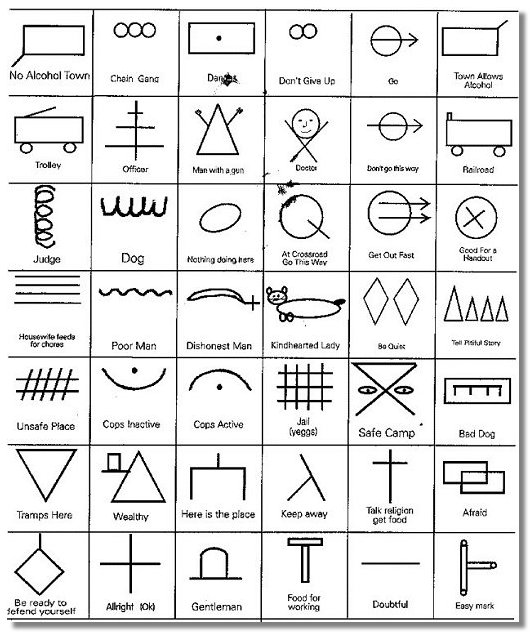
Hobos, Angels, and Klingons


I recently came across a story about the Dance Notation Bureau that talked about the near-death and resurgence of "Labanotation", a written system for annotating dance allegedly accurate down to the eyeball-blink.

Then, the other day, Davey, in one of his various efforts to make sure I go insane or at least don't get as much work done as I might otherwise, sent a link along about the Voynich Manuscript which has yet to be translated, if in fact any translation exists.

It has me thinking about all the different ways we humans use writing, and all of its various forms. How very many of them that were once used are now exceedingly rare or entirely forgotten. On the one hand, it seems a great pity to have lost so much knowledge that was part of humanity's development; on the other, as languages die and are folded into each other, more people are able to communicate, and that can't be all bad. Taken to its natural extreme, we would expect that, given enough time and globalization, everyone will speak the same tongue.

Then there is the idea that all of language springs from some (lost) original, single language, termed Adamic[link] by some, Enochian[link]
by others, and probably known by myriad other names. Those of you who have read Genesis will remember the story of the Tower of Babel, and of the confounding of tongues [link] as punishment for attempting to reach heaven by mere architecture. It's not the only account of a perfect, original language being lost. Some time ago now, I started but never finished The Search for the Perfect Language, by Umberto Eco (Amazon is kind enough to tell me I bought it in May, 2004). From the back copy: "The idea that there once existed a language which perfectly and unambiguously expressed the essence of all possible things and concepts has occupied the minds of philosophers, theologians, mystics, and others for at least two millennia. This is an investigation into the history of that idea and of its profound influence on European thought, culture, and history." I wish I'd read it all, but (and I say this as a fan) Eco's not all that easy to read. Maybe I'll put it back in the queue.

But, for now, we're losing languages and methods of notation. And, reason would argue, it's bound to happen. That linguistics and systems of writing or notation should follow 'the survival of the fittest' comes as no surprise. Probably we would be correct if we said that any such system or language passed out of use because it was no longer needed by those who knew it, or because they themselves failed to pass it on.

Still, part of me pines to know all such things. I doubt I could even come to know the full list of disappeared or little-used systems of writing, much less actually learn any of them.

Here are a few, in broad strokes:


And so forth. Totally useless to my modern life - all of them. And yet... I mean, if I could mark my street with hobo signs saying this wasn't a good place to stop, that'd keep the hobos away, right? Or, if I could read alchemical symbols, I could, uh, make something? If I spoke Navajo, I could be a WWII Codetalker? See, there's no reason to want to know any of it. But that doesn't stop me.

So here's a point to ponder: let's say you woke up tomorrow as a perfect example of Xenoglossia; you can now speak or read/write (but not both speak and write) any language or notational system, living or dead, that is currently known by no more than 100,000 people. Which do you choose, and why?